Project
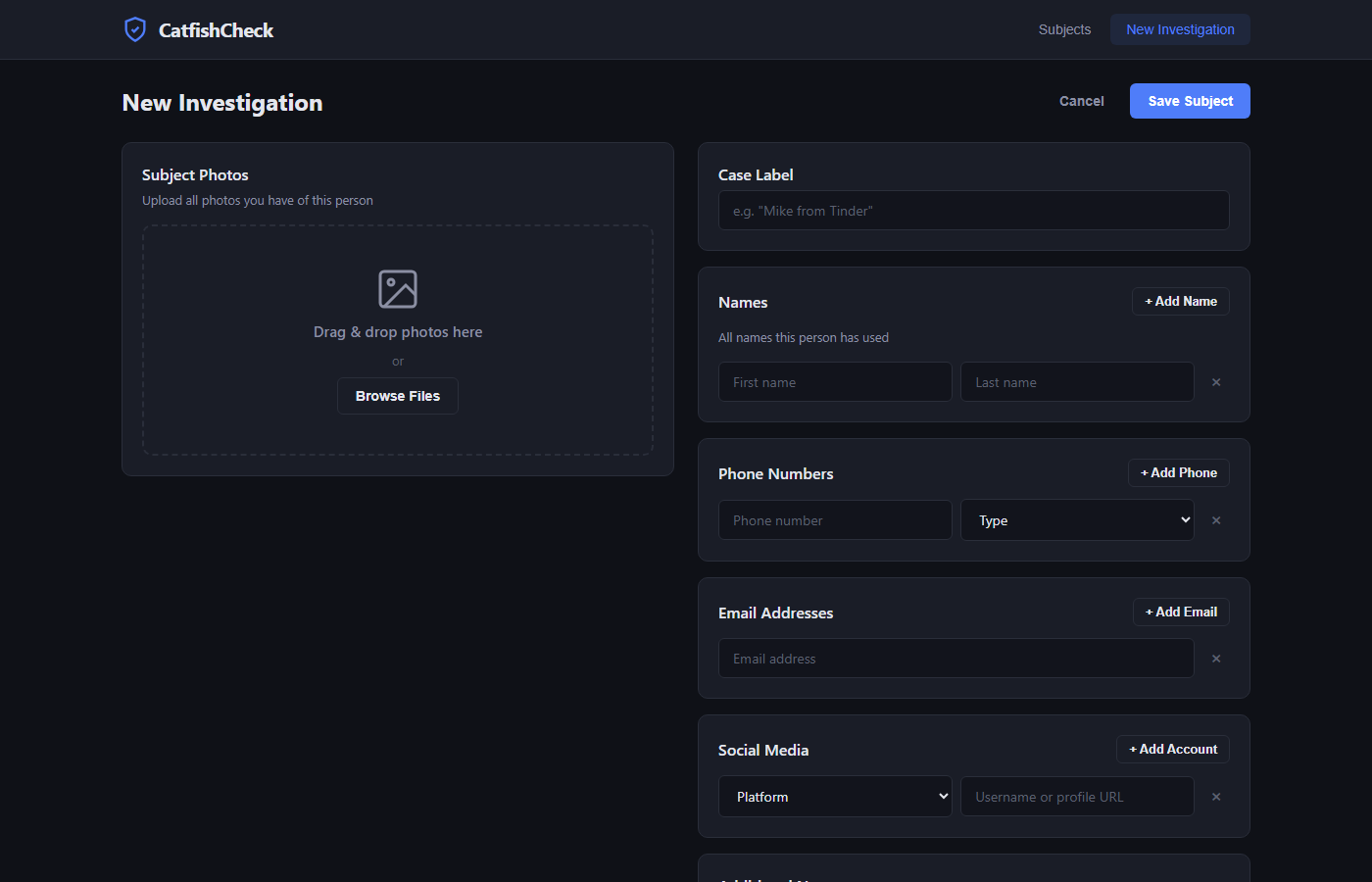
A self-service investigation tool for verifying online identities. Upload photos, phone numbers, social handles, and messages about a suspected scammer and get back a report highlighting red flags.
Investigation modules
Upload photos and check them against Google Images, TinEye, and Yandex. Detect AI-generated faces and extract EXIF metadata.
Carrier lookup flags VoIP and burner numbers. Geographic origin, linked accounts, and scam-number database checks.
Find matching accounts across platforms. Flag inconsistencies in age, location, job, and photos between profiles.
Paste conversation logs to flag scam patterns: love-bombing, money requests, language/timezone mismatches, and known scam scripts.
Cross-check all inputs against each other. Produces an overall confidence score and flags contradictions in the subject's story.
Generate a trackable link to send to the suspect. Captures IP geolocation, browser timezone, and VPN detection. Compares real vs. claimed location.
How it works
Start a new investigation, add all the evidence you have — photos, names, phone numbers, emails, social media accounts, and notes. Run the checks and get a structured report with red flags, confidence scores, and actionable next steps. All data stays in your browser — nothing is uploaded to a server.
That last point is the design and not a caveat. There is no account, no backend and no database: an investigation lives in your browser's own storage and is gone when you clear it. Somebody checking whether a person is who they say they are should not have to hand a third party the photos, the phone number and the messages in order to find out. The app is stable and unchanged, which for a tool with no server is what finished looks like.
Built with